

Introduction
The Acura CL was Acura’s mid-size luxury coupe, built in the United States across two generations from the 1997 to the 2003 model year. It arrived as the coupe companion to the TL, offering a two-door body with a choice of a four-cylinder or a V6 in its first generation and a single strong 3.2-litre V6 in its second. Like every Acura of its era, the CL depends on the correct wheels for more than looks. The right fitment affects handling, braking, ride comfort, and even fuel economy, because the wrong wheels can add weight, change the steering feel, and upset the car’s suspension geometry.
The particular wheel fitment needs for the Acura CL are investigated in this guide. This guide provides all the information, including offset ranges, bolt patterns, hub bore diameters, and wheel size recommendations, whether you are replacing a damaged factory wheel or choosing aftermarket wheels for a sportier look. We also have advice on aftermarket wheels to enable you to acquire the ideal fit without sacrificing ride comfort or performance.
From its four-lug first generation to its five-lug second generation, the Acura CL has a fitment story with one hard rule: the two generations cannot share a wheel. This content will enable you to boldly negotiate the details and avoid the most common fitment mistakes.
Whether your update is for performance or style, this guide will be your reliable source for Acura CL wheel fitment. Let us now address the particular requirements of the car, beginning with its first generation.
First Generation (YA1: 1997–1999)
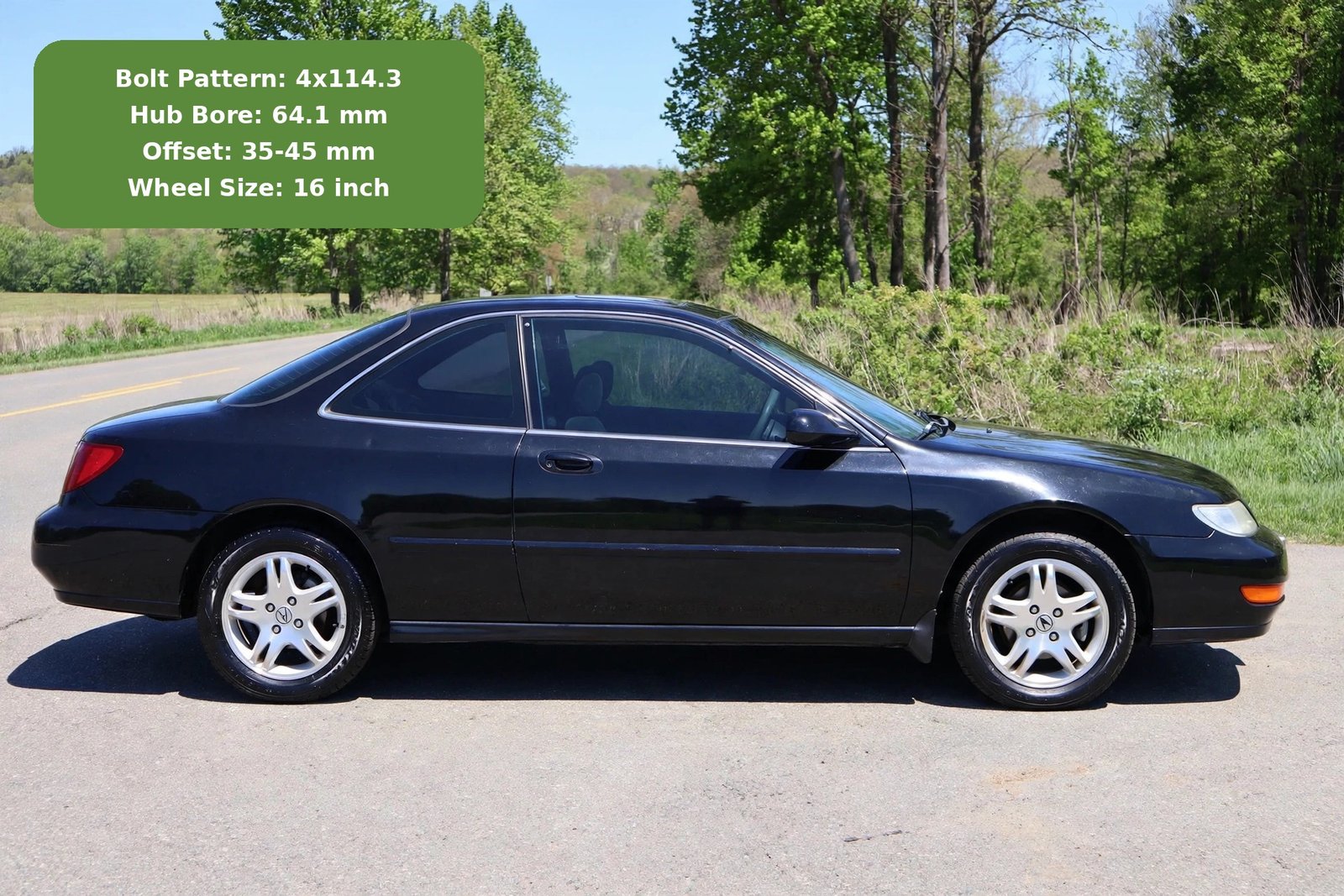
Made from 1997 to 1999, the first-generation CL (chassis code YA1) was Acura’s first car built in the United States. It was offered as the 2.2CL with a 2.2-litre four-cylinder in 1997, replaced by the 2.3CL with a 2.3-litre four-cylinder for 1998 and 1999, alongside the 3.0CL with a 200 hp 3.0-litre V6. Note that there was no 2000 model year CL: production of the first generation ended with 1999, and the redesigned car arrived as a 2001 model. Stock wheel size is 16×6 inches on every first-generation CL, fitted with 205/55 R16 tires. These wheels sit in an offset range of 35mm to 45mm, the range given in Honda and Acura fitment references for this chassis. The CL had a 4×114.3mm bolt pattern, the four-lug layout shared with the same-era Accord coupe and the first-generation TL 2.5. Measuring 64.1 mm, its hub bore guaranteed fit for a variety of aftermarket wheels meant for Honda and Acura cars of the period. M12x1.5 was the lug nut thread size. The recommended cold tire pressure is 30 psi front and 29 psi rear. The first-generation CL can easily fit wheels from 16 inches to 20 inches for those looking for aftermarket wheels without major adjustments. Stated configurations should, however, keep a close rolling diameter to prevent interfering with the ABS and traction control systems.
| Model | Bolt Pattern | Hub Bore | Offset | OEM Wheel | Aftermarket Wheel |
|---|---|---|---|---|---|
| 1997 Acura CL | 4×114.3mm | 64.1mm | 35–45mm | 16 Inch | 16″ to 20″ |
| 1998 Acura CL | 4×114.3mm | 64.1mm | 35–45mm | 16 Inch | 16″ to 20″ |
| 1999 Acura CL | 4×114.3mm | 64.1mm | 35–45mm | 16 Inch | 16″ to 20″ |
On aftermarket wheels, owners often choose an 18-inch wheel for a sharper look and firmer handling, while a 17-inch wheel keeps a little more ride comfort on the CL’s double-wishbone suspension. Aftermarket widths from 6 to 8 inches fit square on all four corners, and the factory setup is square (non-staggered), so there is no wider rear wheel to match. Always confirm clearance, particularly if you are switching to bigger brakes, and match all four tires by make, type, and size. Do not try to fit a five-lug wheel from the second-generation CL: the four-lug hub will not accept it, and no adapter is a safe substitute for the correct bolt pattern.
Special Considerations
Although the first-generation CL allows several wheel choices, make sure your selected wheels and tires fit the factory suspension. The double-wishbone setup is sensitive to offset, so staying inside the 35–45 mm range keeps the steering geometry and bearing loads as Honda designed them, and lowering springs or coilovers could call for changes to stop rubbing. After any wheel modification, alignments should also be reviewed to preserve the best handling. Check the tire placard on the driver’s-door jamb for your exact car, because tire pressure can differ by trim and load, and confirm the offset stamped on the back of any used factory wheel before you buy it, since some fitment listings record a wider 34–48 mm stock offset range for this car.
Second Generation (YA4: 2001–2003)
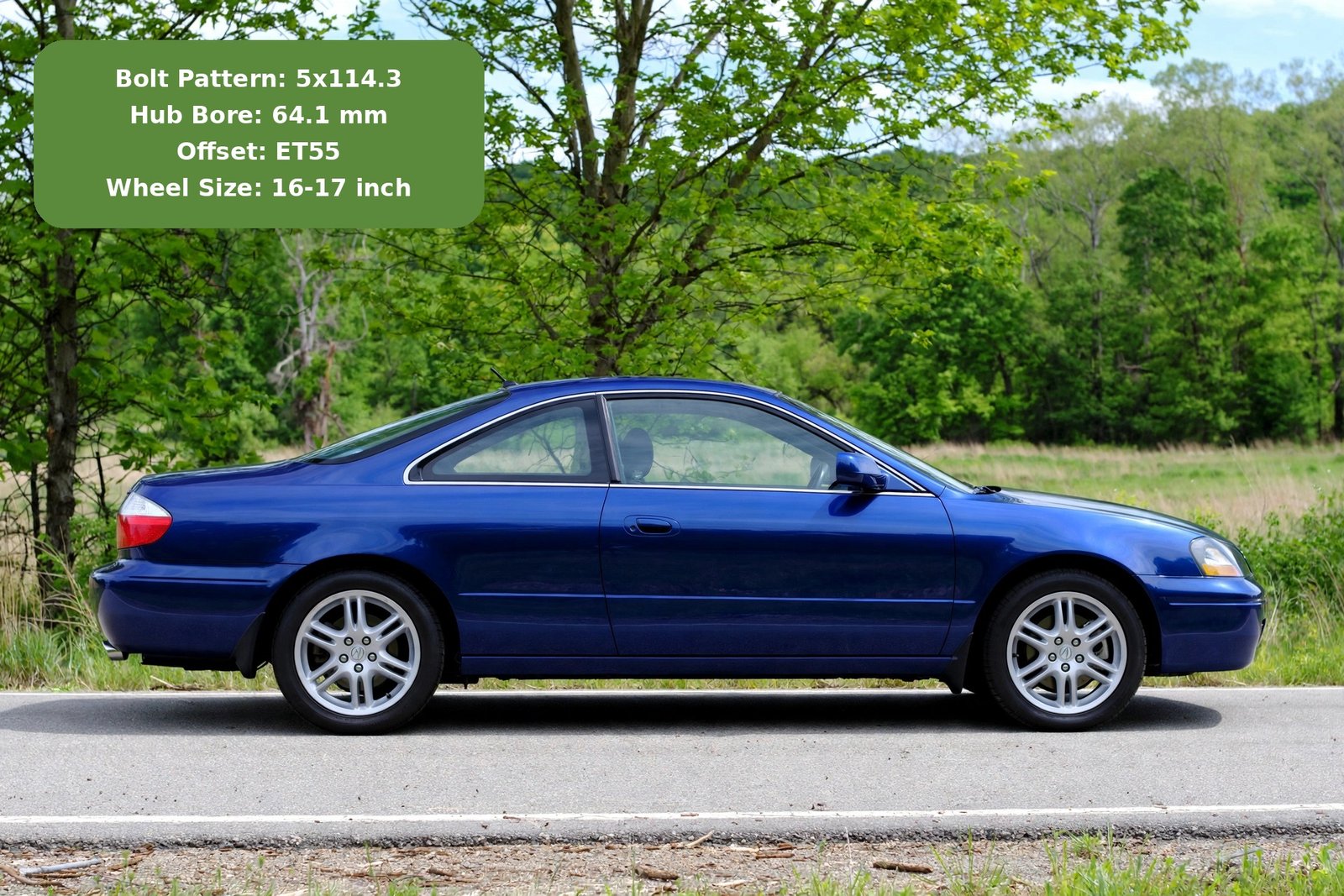
Made from 2001 to 2003, the second-generation CL (chassis code YA4) returned after skipping the 2000 model year, now built on the TL platform with a single 3.2-litre V6. The base 3.2CL made 225 hp, while the Type-S made 260 hp, and a close-ratio 6-speed manual with a limited-slip differential arrived for the 2003 Type-S. Stock wheel sizes are 16×6.5 inches on the base model and 17×7 inches on the Type-S. These wheels had an offset of ET55, providing stability and clearance in harmony. The second generation moved to a 5×114.3mm bolt pattern, so its wheels do not interchange with the four-lug first generation. Measuring 64.1 mm, its hub bore stayed the same as the first generation, and M12x1.5 remained the lug nut thread size. The factory tire sizes are P205/60 R16 on the base model and P215/50 R17 on the Type-S, and the recommended cold tire pressure is 32 psi on both trims, as listed in the owner’s manual. The second-generation CL can easily fit wheels from 16 inches to 20 inches for those looking for aftermarket wheels without major adjustments. Stated configurations should, however, keep a close rolling diameter to prevent interfering with the ABS, traction control, and Vehicle Stability Assist systems.
| Model | Bolt Pattern | Hub Bore | Offset | OEM Wheel | Aftermarket Wheel |
|---|---|---|---|---|---|
| 2001 Acura CL | 5×114.3mm | 64.1mm | ET55 | 16–17 Inch | 16″ to 20″ |
| 2002 Acura CL | 5×114.3mm | 64.1mm | ET55 | 16–17 Inch | 16″ to 20″ |
| 2003 Acura CL | 5×114.3mm | 64.1mm | ET55 | 16–17 Inch | 16″ to 20″ |
On aftermarket wheels, fans sometimes choose an 18-inch wheel, the most popular swap size for this car, for a sharper look, or stay with the 17-inch Type-S setup for a balance of grip and comfort. Aftermarket widths from 6 to 7.5 inches fit square on all four corners, and the factory setup is square (non-staggered) on both trims. Always confirm clearance, particularly on the Type-S with its larger brakes, and match all four tires by make, type, and size. The owner’s manual warns that driving with varying tire or wheel sizes may cause the Vehicle Stability Assist system to malfunction, so keep all four corners the same size and type. A few secondary listings give ET50 and a 16×6 base wheel instead of ET55 and 16×6.5; the owner’s manual confirms the 16×6.5 and 17×7 wheel sizes, so check the ET stamping on the back of any factory wheel before ordering a replacement.
Special Considerations
Although the second-generation CL allows several wheel choices, make sure your selected wheels and tires fit the factory suspension. The VSA system reads wheel speed at all four corners, so a mismatched rolling diameter can trigger faults as well as speedometer error, and lowering springs or coilovers could call for changes to stop rubbing. After any wheel modification, alignments should also be reviewed to preserve the best handling. Check the tire placard on the driver’s-door jamb for your exact car, because tire pressure can differ by market and load, and note that the Type-S brakes need extra caliper clearance when you shop for aftermarket wheels.
General Tips for Acura CL Wheel Fitment
A good fit with the Acura CL depends on knowing bolt patterns and offsets when choosing wheels. The first generation has a 4×114.3mm bolt pattern and the second generation has a 5×114.3mm bolt pattern, hence the wheels have four or five bolt holes set in a circle with a 114.3 mm diameter. The lug count is the first thing to confirm on a CL, because the two generations look similar but share no wheels at all, and a wheel from a 1999 CL will not bolt onto a 2001 CL, or the other way round.
A wheel’s offset sets its distance from the hub of the vehicle. Positive offsets, that is, 35mm to 45mm on the first generation and ET55 on the second, suggest that the wheel mounting surface is nearer the outside of the wheel. Selecting an offset outside the advised range could cause problems including rubbing against suspension parts or stretching too far past the fender.
Check the hub bore size always as well. With 64.1 mm as the CL standard on both generations, the hub will fit snugly without requiring centering rings. Hub-centric rings can aid in keeping stability if utilizing larger bore wheels.
Common Fitment Issues
One of the most often occurring problems when switching to bigger wheels or reduced offsets is rubbing. Think about the following to help avoid this:
- As you upsize, keep a similar rolling diameter to avoid ABS faults, VSA faults on the second generation, and speedometer mistakes.
- Wheel spacers should be used carefully since they change the offset and stress the hub bears.
- Make sure, particularly on Type-S cars with bigger brakes, aftermarket wheels clear the brake calipers.
- Never mix four-lug and five-lug wheels between the generations: the bolt pattern change at 2001 is absolute.
Conclusion
Selecting appropriate wheels for your Acura CL is about maintaining the performance and safety integrity of your car, not only about appearance. Knowing specifics like wheel diameters, offsets, bolt patterns, and hub bores guarantees a flawless fit whether you drive a 1997 first-generation coupe or a 2003 Type-S with its 6-speed manual.
With advice for both OEM replacements and aftermarket enhancements, this guide has led you through the fitment of the CL’s two generations, from the four-lug YA1 cars of 1997–1999 to the five-lug YA4 cars of 2001–2003. Remember how your wheel selection affects general ride quality, brake clearance, and suspension geometry. See a wheel fitment specialist in doubt to identify the ideal fit for your requirements.
Your Acura CL is deserving of the best; you may improve its appearance, feel, and performance with the correct wheels. Having all the information now, it’s time to make a wise choice and get your CL the upgrade it deserves!

Ryan Mitchell is a wheel and tire fitment specialist with over 10 years of hands-on experience in the automotive aftermarket. He has helped thousands of drivers find the right wheels, tires, and offsets for their vehicles, and writes in-depth fitment guides covering bolt patterns, hub bores, OEM wheel sizes, and tire specifications for every major make and model.