
Introduction
The Acura Integra arrived for the 1986 model year as Acura’s first compact sport sedan and hatchback, and it quickly became the car that defined the brand for a generation of drivers. Across four generations and a twenty-two-year break, the Integra has stood for sharp handling, high-revving engines, and honest driver involvement, from the original three-door hatchback to the revived five-door liftback of today. Like every Acura, the Integra depends on the correct wheels for more than looks. The right fitment affects handling, braking, ride comfort, and even fuel economy, because the wrong wheels can add weight, change the steering feel, and upset the suspension geometry the car was designed around.
The particular wheel fitment needs for the Acura Integra are investigated in this guide. This guide provides all the information, including offset ranges, bolt patterns, hub bore diameters, and wheel size recommendations, whether you are replacing a damaged factory wheel or choosing aftermarket wheels for a sportier look. We also have advice on aftermarket wheels to enable you to acquire the ideal fit without sacrificing ride comfort or performance.
From its launch to its final model year, the Integra has a fitment story with one big split: the original cars from 1986 to 2001 all run a four-lug pattern, while the revived car from 2023 runs a five-lug pattern shared with the modern Civic. This content will enable you to boldly negotiate the details and avoid the most common fitment mistakes, above all buying wheels for the wrong generation.
Whether your update is for performance or style, this guide will be your reliable source for Acura Integra wheel fitment. Let us now address the particular requirements of the car, beginning with its first generation.
First Generation (AV: 1986–1989)
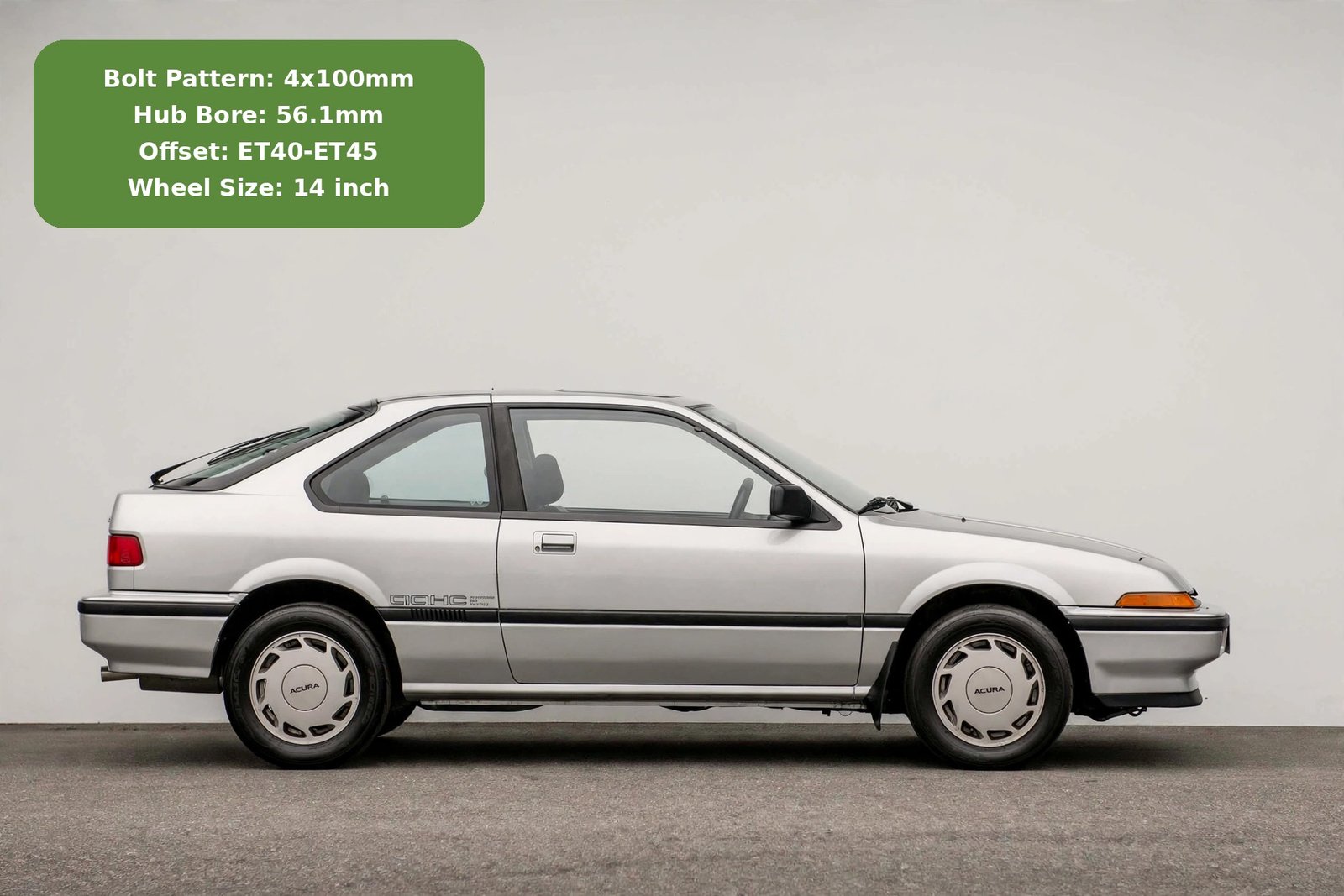
Built from 1986 to 1989, the first-generation Integra was sold as a three-door hatchback and a four-door sedan, in RS, LS, and LS Special Edition trims. Every car in this generation rode on 14×5.5 inch wheels, steel on the base cars and alloy on the higher trims. These wheels had an offset ranging from ET40 to ET45: the factory steel wheel is ET40, while some factory alloys and replacement listings show ET45, so check the stamping on your own wheels before ordering. The Integra had a 4x100mm bolt pattern, the Honda compact-car standard shared with the Civic and CRX of the era. Measuring 56.1 mm, its hub bore guaranteed a snug hub-centric fit for a variety of aftermarket wheels meant for Honda and Acura cars. M12x1.5 was the lug nut thread size, tightened to 81 lb-ft (110 Nm). The factory tire sizes are 185/60R14 on the steel wheels, with 185/65R14 and 195/60R14 also fitted, and the recommended cold tire pressure is 29 psi. The Integra can easily fit wheels from 14 inches to 18 inches for those looking for aftermarket wheels without major adjustments. Stated configurations should, however, keep a close rolling diameter to prevent interfering with the ABS and traction control systems.
| Model | Bolt Pattern | Hub Bore | Offset | OEM Wheel | Aftermarket Wheel |
|---|---|---|---|---|---|
| 1986 Acura Integra | 4x100mm | 56.1mm | ET40–ET45 | 14 Inch | 14 inch to 18 inch |
| 1987 Acura Integra | 4x100mm | 56.1mm | ET40–ET45 | 14 Inch | 14 inch to 18 inch |
| 1988 Acura Integra | 4x100mm | 56.1mm | ET40–ET45 | 14 Inch | 14 inch to 18 inch |
| 1989 Acura Integra | 4x100mm | 56.1mm | ET40–ET45 | 14 Inch | 14 inch to 18 inch |
On aftermarket wheels, owners of the first-generation Integra often step up to a 15-inch wheel with a 195/50R15 or 195/55R15 tire for a sharper look, or stay with the 14-inch setup for a little more comfort and cheaper tires. A 15×6 or 15×6.5 wheel at ET38 to ET45 keeps the stance clean and the fender rubbing away. Always confirm clearance, particularly if you are switching to bigger brakes, and match all four tires by make, type, and size.
Special Considerations
Although the first-generation Integra allows several wheel choices, make sure your selected wheels and tires fit the factory suspension. These cars are now nearly forty years old, so check the hubs and studs for corrosion before fitting new wheels, and replace any worn lug nuts rather than reusing them. This car predates tyre pressure monitoring systems, so check pressures manually against the door-jamb placard. Lowering springs or coilovers could call for changes to stop rubbing, especially with 17- or 18-inch wheels. After any wheel modification, alignments should also be reviewed to preserve the best handling.
Second Generation (DA/DB: 1990–1993)
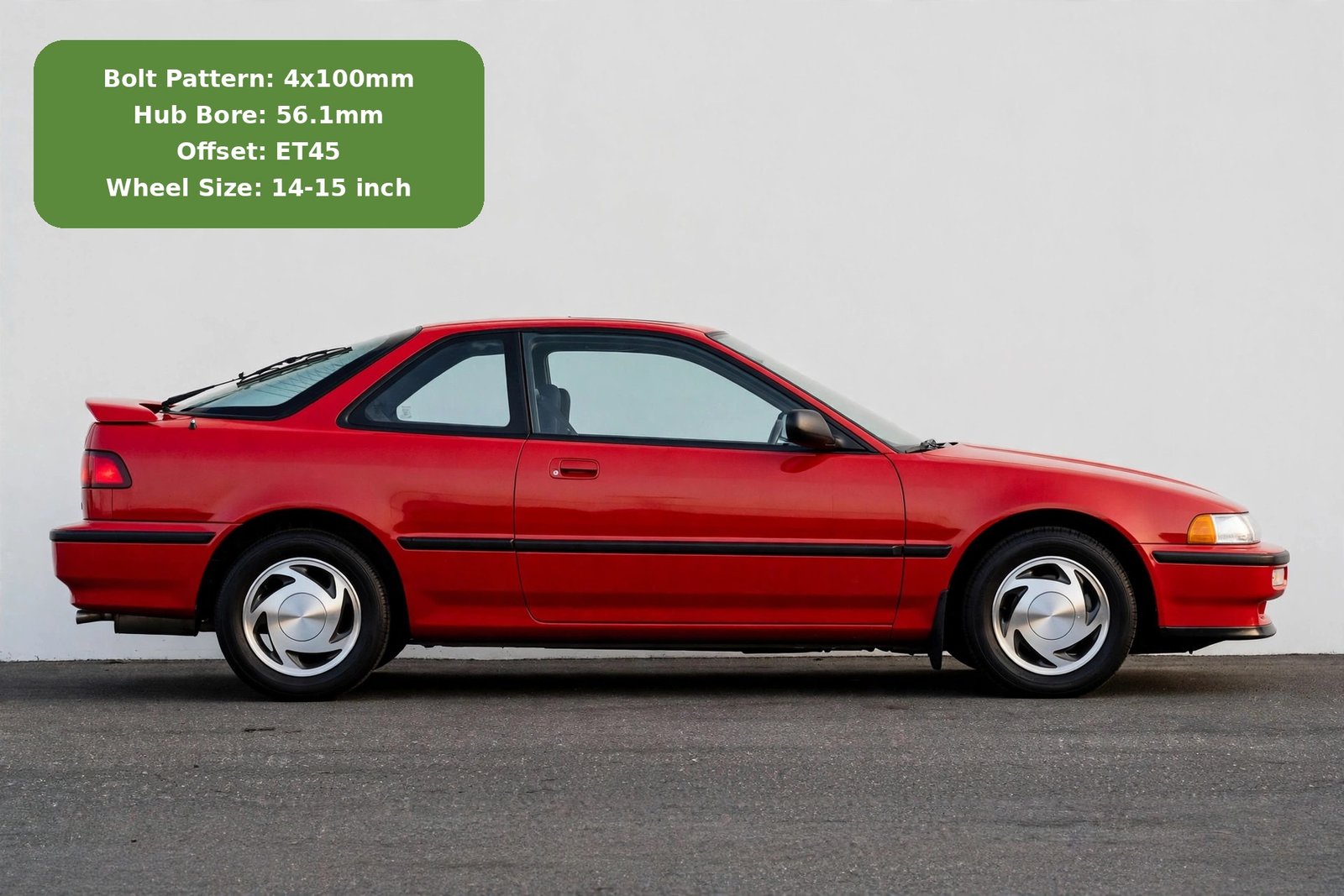
Built from 1990 to 1993, the second-generation Integra grew slightly larger and added Honda’s first VTEC engine in the GS-R, which arrived in North America in May 1992. Most trims rode on 14×5.5 inch wheels at ET45, while the GS-R came with 15×6 inch alloy wheels, also at ET45. These wheels had an offset of ET45, providing stability and clearance in harmony. The Integra kept the 4x100mm bolt pattern and the 56.1 mm hub bore from the first generation, so wheels from the earlier car bolt straight on. M12x1.5 was the lug nut thread size, tightened to 81 lb-ft (110 Nm). The factory tire sizes are 195/60R14 on the 14-inch wheels and 195/55R15 on the GS-R 15-inch wheels, with 205/55R15 also listed for the larger wheel, and the recommended cold tire pressure is 29 psi for the 14-inch setup and 30 psi for the 15-inch setup. The Integra can easily fit wheels from 14 inches to 18 inches for those looking for aftermarket wheels without major adjustments. Stated configurations should, however, keep a close rolling diameter to prevent interfering with the ABS and traction control systems.
| Model | Bolt Pattern | Hub Bore | Offset | OEM Wheel | Aftermarket Wheel |
|---|---|---|---|---|---|
| 1990 Acura Integra | 4x100mm | 56.1mm | ET45 | 14 Inch | 14 inch to 18 inch |
| 1991 Acura Integra | 4x100mm | 56.1mm | ET45 | 14 Inch | 14 inch to 18 inch |
| 1992 Acura Integra | 4x100mm | 56.1mm | ET45 | 14–15 Inch | 14 inch to 18 inch |
| 1993 Acura Integra | 4x100mm | 56.1mm | ET45 | 14–15 Inch | 14 inch to 18 inch |
On aftermarket wheels, owners of the second-generation Integra often choose the factory GS-R 15-inch wheels as a direct upgrade for an RS or LS car, since they share the same bolt pattern, hub bore, and offset. A 15×7 wheel at ET35 to ET45 with a 205/50R15 tire is the popular aftermarket step up, keeping the rolling diameter close to stock and the fender rubbing away, while 16- and 17-inch wheels suit cars that want a more modern stance. Always confirm clearance, particularly if you are switching to bigger brakes, and match all four tires by make, type, and size.
Special Considerations
Although the second-generation Integra allows several wheel choices, make sure your selected wheels and tires fit the factory suspension. The GS-R’s VTEC engine and firmer suspension leave a little less room for error than a base RS, so check front fender clearance at full steering lock when fitting wider wheels. This car predates tyre pressure monitoring systems, so check pressures manually against the door-jamb placard. Lowering springs or coilovers could call for changes to stop rubbing, especially with 17- or 18-inch wheels. After any wheel modification, alignments should also be reviewed to preserve the best handling.
Third Generation (DB/DC: 1994–2001)
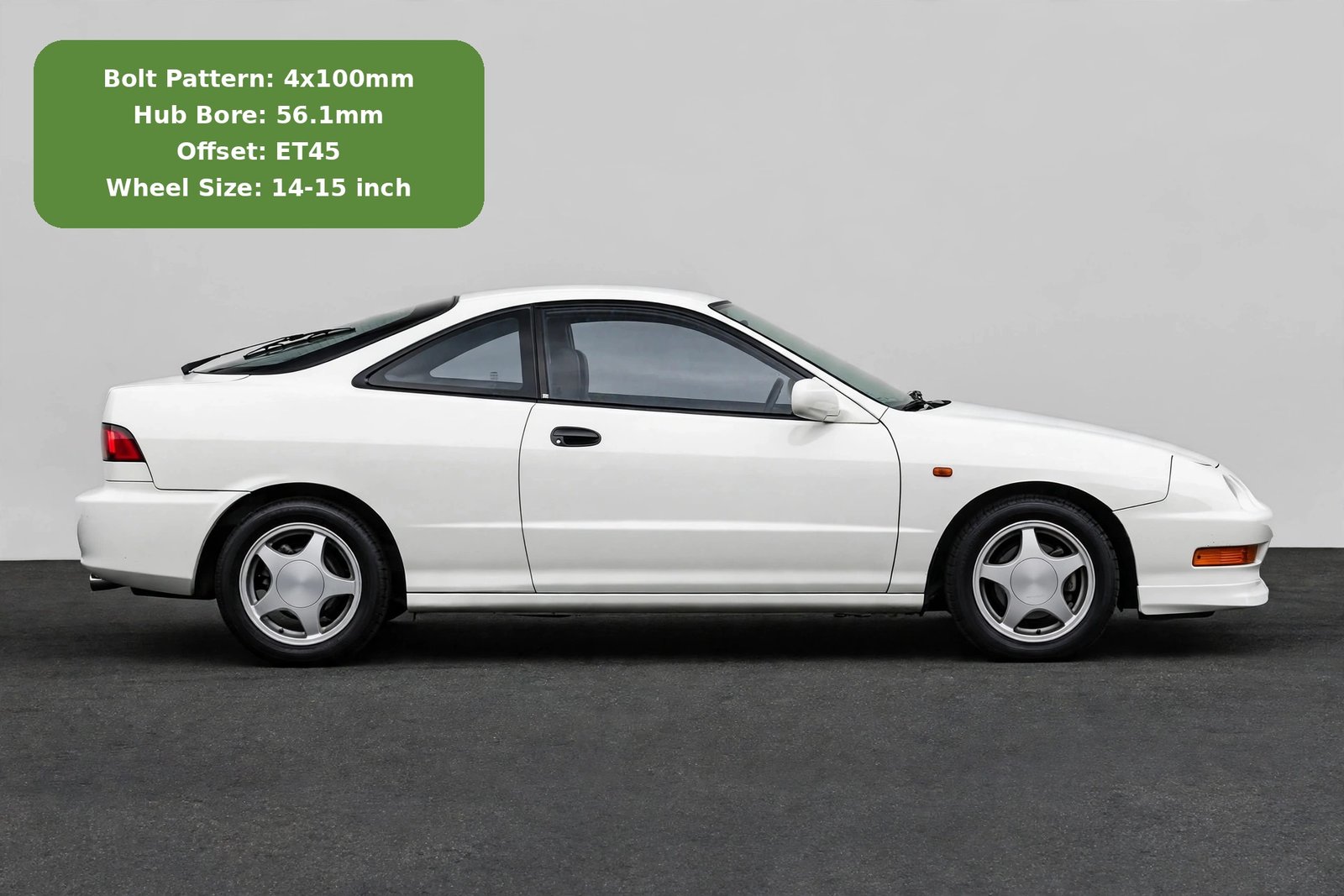
Built from 1994 to 2001, the third-generation Integra is the most loved of the original cars, sold as a coupe and a four-door sedan in RS, LS, GS, GS-R, and Special Edition trims. The RS and LS rode on 14×5.5 inch wheels at ET45, while the GS, GS-R, and Special Edition came with 15×6 inch alloy wheels, also at ET45. These wheels had an offset of ET45, providing stability and clearance in harmony. The Integra kept the 4x100mm bolt pattern and the 56.1 mm hub bore used since the 1986 launch, so wheels from any earlier Integra bolt straight on. M12x1.5 was the lug nut thread size, tightened to 81 lb-ft (110 Nm). The factory tire sizes are 195/60R14 on the 14-inch wheels and 195/55R15 on the 15-inch wheels, and the recommended cold tire pressure is 29 psi for the 14-inch setup and 35 psi front and 33 psi rear for the 15-inch GS-R setup. The Integra can easily fit wheels from 14 inches to 18 inches for those looking for aftermarket wheels without major adjustments. Stated configurations should, however, keep a close rolling diameter to prevent interfering with the ABS and traction control systems.
| Model | Bolt Pattern | Hub Bore | Offset | OEM Wheel | Aftermarket Wheel |
|---|---|---|---|---|---|
| 1994 Acura Integra | 4x100mm | 56.1mm | ET45 | 14–15 Inch | 14 inch to 18 inch |
| 1995 Acura Integra | 4x100mm | 56.1mm | ET45 | 14–15 Inch | 14 inch to 18 inch |
| 1996 Acura Integra | 4x100mm | 56.1mm | ET45 | 14–15 Inch | 14 inch to 18 inch |
| 1997 Acura Integra | 4x100mm | 56.1mm | ET45 | 14–15 Inch | 14 inch to 18 inch |
| 1998 Acura Integra | 4x100mm | 56.1mm | ET45 | 14–15 Inch | 14 inch to 18 inch |
| 1999 Acura Integra | 4x100mm | 56.1mm | ET45 | 14–15 Inch | 14 inch to 18 inch |
| 2000 Acura Integra | 4x100mm | 56.1mm | ET45 | 14–15 Inch | 14 inch to 18 inch |
| 2001 Acura Integra | 4x100mm | 56.1mm | ET45 | 14–15 Inch | 14 inch to 18 inch |
On aftermarket wheels, the proven upsizes keep the rolling diameter close to stock: a 15×7 ET35 to ET38 wheel with a 205/50R15 tire for a flush look at stock height, or a 16×7 ET38 wheel with a 205/45R16 tire. Both sit inside the ET35 to ET45 offset range and clear the factory suspension and brakes. The one trim to watch is the Type R, sold from 1997 to 2001: it alone steps up to a 5×114.3mm bolt pattern with a 64.1 mm hub bore and a 15×6 ET50 wheel, so Type R wheels do not bolt onto a four-lug Integra and four-lug Integra wheels do not bolt onto a Type R. The Type R has its own separate fitment guide. Always match all four tires by make, type, and size.
Special Considerations
Although the third-generation Integra allows several wheel choices, make sure your selected wheels and tires fit the factory suspension. Lowering the car adds natural camber, which tucks the top of the wheel inward, so a setup that looked perfect at stock height can look tucked once lowered — keep the width sensible (15×7 ET35 to ET38, or 16×7 ET35 lowered) and use the extra camber before pushing the offset further. Going too aggressive, such as ET25 while lowered, risks fender contact, especially at the front. This car predates tyre pressure monitoring systems, so check pressures manually against the door-jamb placard. After any wheel modification, alignments should also be reviewed to preserve the best handling.
Fourth Generation (DE: 2023–Present)
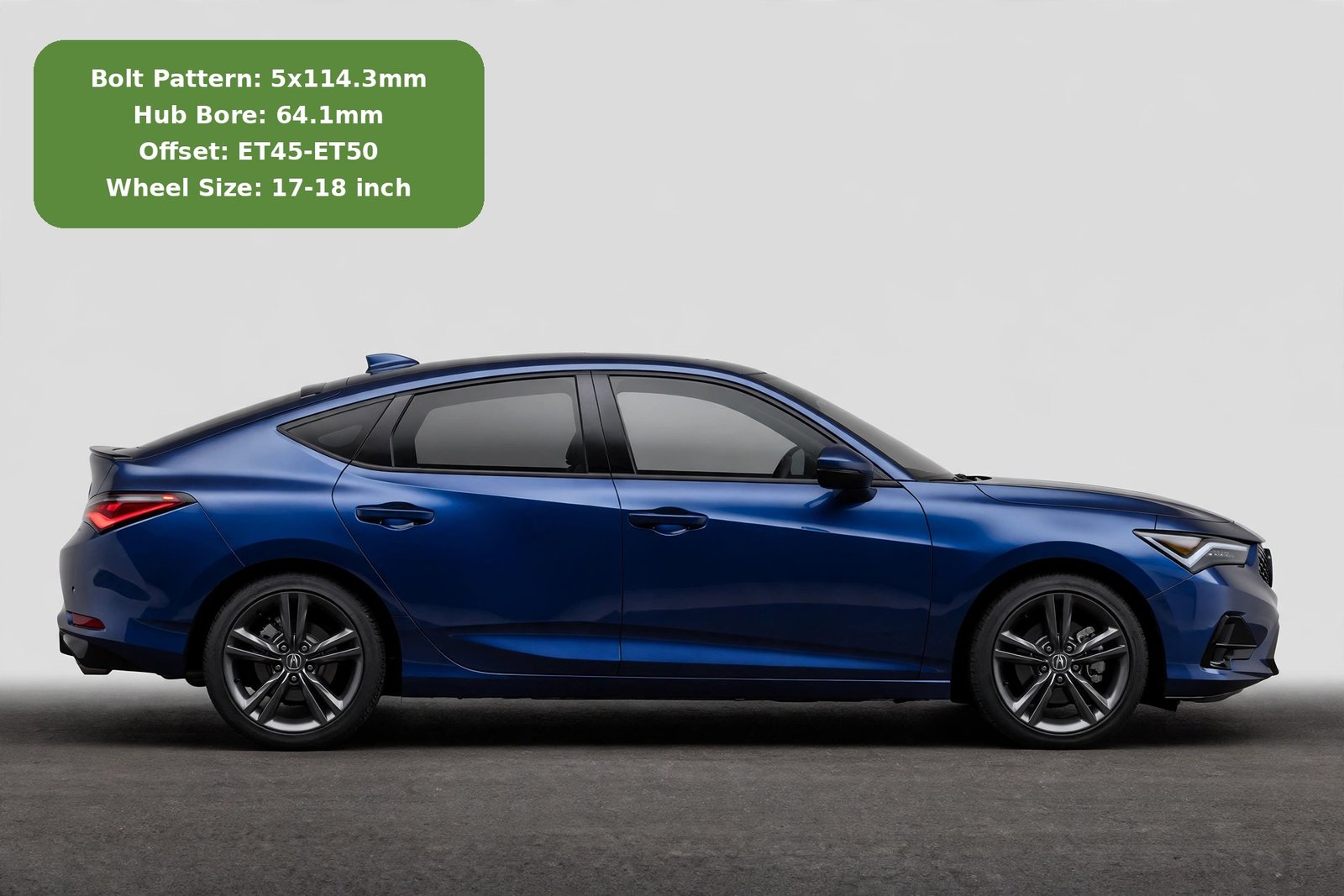
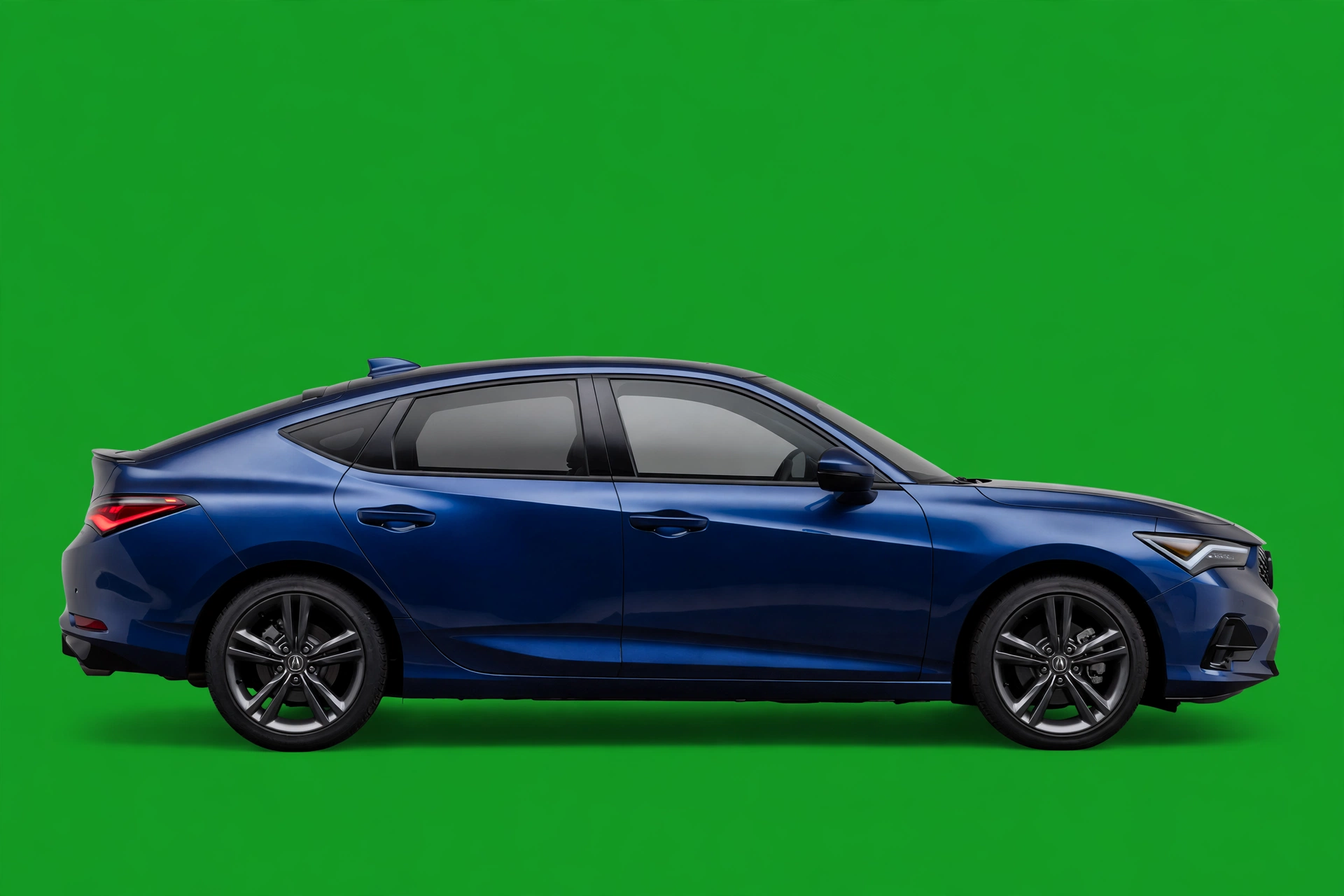
Built from 2023 to the present, the revived fourth-generation Integra returned after a twenty-two-year break as a five-door liftback on the modern Honda Civic platform, replacing the ILX in the Acura lineup. Production began in 2022 for the 2023 model year, and a facelift arrived for 2025 with the same wheel fitment. The base Integra rides on 17×7 inch wheels at ET45, while the A-Spec and Elite A-Spec come with 18×8 inch wheels at ET50. These wheels had an offset ranging from ET45 to ET50, providing stability and clearance in harmony. The Integra now uses a 5×114.3mm bolt pattern with five lugs, which is also written as 5×4.5 inches, and a hub bore measuring 64.1 mm — the modern Honda five-lug standard, not the four-lug pattern of the original cars. M12x1.5 is the lug nut thread size, tightened to 80 lb-ft (108 Nm). The factory tire sizes are 215/50R17 on the 17-inch wheels and 235/40R18 on the 18-inch wheels, and the recommended cold tire pressure is 32 psi for the 17-inch setup and 33 psi front and 32 psi rear for the 18-inch setup. The Integra can easily fit wheels from 17 inches to 20 inches for those looking for aftermarket wheels without major adjustments. Stated configurations should, however, keep a close rolling diameter to prevent interfering with the ABS and traction control systems.
| Model | Bolt Pattern | Hub Bore | Offset | OEM Wheel | Aftermarket Wheel |
|---|---|---|---|---|---|
| 2023 Acura Integra | 5×114.3mm | 64.1mm | ET45–ET50 | 17–18 Inch | 17 inch to 20 inch |
| 2024 Acura Integra | 5×114.3mm | 64.1mm | ET45–ET50 | 17–18 Inch | 17 inch to 20 inch |
| 2025 Acura Integra | 5×114.3mm | 64.1mm | ET45–ET50 | 17–18 Inch | 17 inch to 20 inch |
| 2026 Acura Integra | 5×114.3mm | 64.1mm | ET45–ET50 | 17–18 Inch | 17 inch to 20 inch |
On aftermarket wheels, owners of the fourth-generation Integra often step up to an 18-inch wheel with a 235/40R18 tire for a sharper look, or a 19-inch setup for a more aggressive stance. An 18×8.5 ET43 wheel with a 235/40R18 tire sits inside the tested offset range and keeps the rolling diameter close to stock. The one trim to watch is the Type S, sold from 2024: it moves to a 5x120mm bolt pattern with a 70.1 mm hub bore and front Brembo brake calipers, so Type S wheels do not fit the base Integra or A-Spec, and base wheels do not fit the Type S. The Type S has its own separate fitment guide. Always confirm clearance, particularly with the larger brakes, and match all four tires by make, type, and size.
Special Considerations
Although the fourth-generation Integra allows several wheel choices, make sure your selected wheels and tires fit the factory suspension and clear the brake calipers. This car has a direct tyre pressure monitoring system, so transfer the TPMS sensors to the new wheels or fit new ones, and reset the system after any wheel change. The 18-inch A-Spec wheel sits further out than the base 17-inch wheel, so check front fender clearance at full steering lock when fitting it to a base car. Lowering springs or coilovers could call for changes to stop rubbing, especially with 19- or 20-inch wheels. After any wheel modification, alignments should also be reviewed to preserve the best handling. Check the tire placard on the driver’s-door jamb for your exact car, because tire pressure can differ by trim and tire size.
General Tips for Acura Integra Wheel Fitment
A good fit with the Acura Integra depends on knowing bolt patterns and offsets when choosing wheels — and on knowing which Integra you own, because the pattern changed completely between the original cars and the revived car. The original Integras from 1986 to 2001 have a 4x100mm bolt pattern, hence the wheels have four lug nut holes set in a circle with a 100 mm diameter. The revived Integra from 2023 has a 5×114.3mm bolt pattern, hence the wheels have five lug holes set in a circle with a 114.3 mm diameter. The two patterns never interchange, so search by your model year and bolt pattern rather than by model name alone, and never assume a wheel that fits one Integra fits another.
A wheel’s offset sets its distance from the hub of the vehicle. Positive offsets, that is, ET40 to ET45 on the first generation, ET45 on the second and third generations, and ET45 to ET50 on the fourth generation, suggest that the wheel mounting surface is nearer the outside of the wheel. Selecting an offset outside the advised range could cause problems including rubbing against suspension parts or stretching too far past the fender.
Check the hub bore size always as well. With 56.1 mm as the original Integra standard and 64.1 mm as the revived Integra standard, the hub will fit snugly without requiring centering rings. Hub-centric rings can aid in keeping stability if utilizing larger bore wheels, which many universal aftermarket wheels have.
Common Fitment Issues
One of the most often occurring problems when switching to bigger wheels or reduced offsets is rubbing. Think about the following to help avoid this:
- As you upsize, keep a similar rolling diameter to avoid ABS faults and speedometer mistakes.
- Wheel spacers should be used carefully since they change the offset and stress the hub bears.
- Make sure, particularly on cars with bigger brakes, aftermarket wheels clear the brake calipers.
- A wider bore wheel without hub-centric rings can cause vibration at highway speed, so fit rings sized to 56.1 mm on the original cars or 64.1 mm on the revived car.
- Never buy four-lug Integra wheels for a 2023 or newer Integra, and never buy five-lug wheels for a 1986–2001 Integra: the bolt patterns do not interchange.
- On the third generation, never buy Type R wheels for a regular Integra: the Type R alone uses 5×114.3 with a 64.1 mm hub bore. On the fourth generation, never buy Type S wheels for a base or A-Spec car: the Type S alone uses 5×120 with a 70.1 mm hub bore.
Conclusion
Selecting appropriate wheels for your Acura Integra is about maintaining the performance and safety integrity of your car, not only about appearance. Knowing specifics like wheel diameters, offsets, bolt patterns, and hub bores guarantees a flawless fit whether you drive a 1986 launch car or a brand-new 2026 model.
With advice for both OEM replacements and aftermarket enhancements, this guide has led you through the fitment of the Integra’s four generations, from the 14-inch wheels of the original three generations to the 17- and 18-inch wheels of the revived car, and through the big split between the four-lug originals and the five-lug modern car. Remember how your wheel selection affects general ride quality, brake clearance, and suspension geometry. See a wheel fitment specialist in doubt to identify the ideal fit for your requirements.
Your Acura Integra is deserving of the best; you may improve its appearance, feel, and performance with the correct wheels. Having all the information now, it’s time to make a wise choice and get your Integra the upgrade it deserves!

Ryan Mitchell is a wheel and tire fitment specialist with over 10 years of hands-on experience in the automotive aftermarket. He has helped thousands of drivers find the right wheels, tires, and offsets for their vehicles, and writes in-depth fitment guides covering bolt patterns, hub bores, OEM wheel sizes, and tire specifications for every major make and model.